Bored Butter?
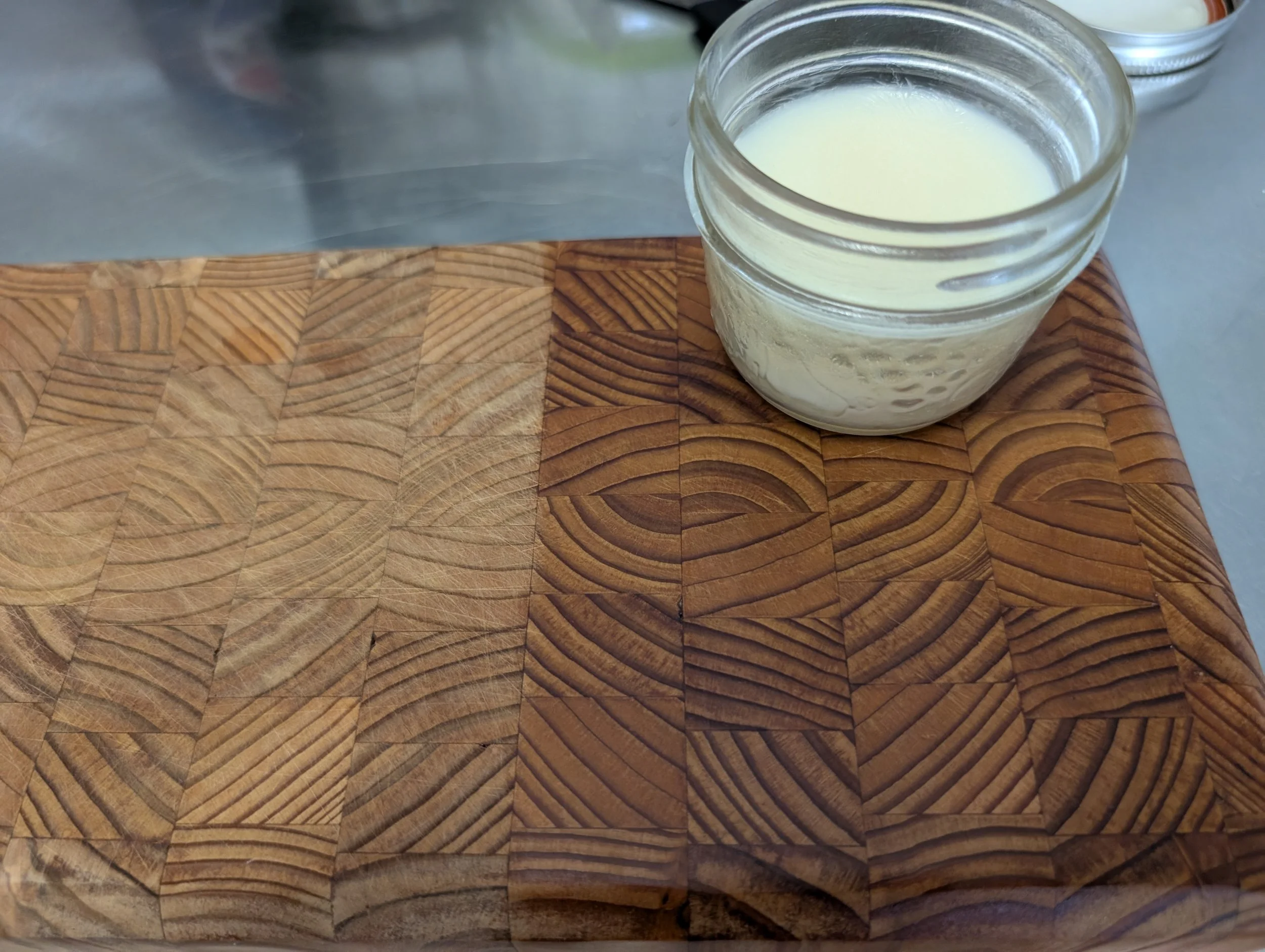
On the right is the board butter and it applied to the board. Notice that the cut marks from knives pretty much disappear!
Are you bored? Do you have butter? Never mind, this got weird really quickly... We’re actually talking about Board Butter today. A wonderful thing to have that is fun to use and keeps your cutting boards looking beautiful. But, that’s not all! Did you know keeping your cutting boards oiled up also helps extend its life? Maintaining your boards will save you a ton of money in the long run and it’s once you try applying board butter, you’ll understand every woodworkers favourite part of woodworking.
Wood is a porous material and will hold and lose moisture over time. Usually as time progresses, wood will dry out and lose its moisture as long as it isn’t living in a lake. Think about firewood, the seasoned firewood has either been air drying or dried out with the aid of heat. Firewood also splits very easily once it is dried. Your cutting board is doing the same thing. It is slowly drying out and becomes much easier to damage with your knives or might even crack on its own. And once you have a crack or it has damage, you have now created the perfect spoor bacteria to grow. Sure, you can wash it and use hot water or throw it in the dishwasher to kill the bacteria. But, that will only make the damage get worse and you will enter a vicious cycle of fighting bacteria.
You can repair cutting boards by sanding the finish or gluing up cracks. But, that’s a blog post for another day. Our plan of action is maintenance to avoid repairs. By introducing oils and wax, we are keeping the wood hydrated so that it doesn’t crack. As you know, oil does not evaporate the same way water does! We are providing a thin layer of armour that protects the board for years to come. As you use your board and wash it, it will gradually look lighter in colour and will feel dryer to the touch. Once you get there, it is time to reapply your board butter.
Board butter is a combination of food grade mineral oil, beeswax, and some carnauba wax. You can oil a board with any of these items with varying degrees of success. Mineral oil is very thin and will soak into the pores of the wood, but it also dries out quite quickly. Beeswax is great but it is hard at room temperature and difficult to apply. Being hard also makes it difficult to penetrate the pores of the wood without adding heat. Carnauba wax is a wonderful wax that provides a nice protective layer, but is next to impossible to apply on its own. It is very hard but will provide a beautiful shine that is durable (common ingredient for waxing a car!). A combination of all three ingredients will make the perfect brick of butter to spread onto your boards.
It is really quite easy to make your own board butter and you’ve got to figure out what ratios work for you! We are woodworkers so we have a glue pot which is a very easy way to heat up a jar without direct heat and I don’t have to babysit it. I can mix all the ingredients and throw it in, wait for everything to melt and mix it up. But this is also very easily doable by double boiling on the stove. Put a glass or steel bowl over a pot of water that is boiling and you’re good to go. I will include my current favourite blend of mineral oil, beeswax, and carnauba wax below. I’m sure I will continue to experiment and tweak my recipe as I run out of it. Do use a scale to measure the ingredients by weight.
To apply, use a soft cloth, paper towel (not ideal as they can break down and leave little fibers behind), shop towel, or even your hand if you want. Rub some of the board butter onto your delivery device and then buff it into your cutting board. Some small circular motions to work the butter into every pore of the wood. Let it sit for a little bit, then wipe off the excess. It’s as easy as that!
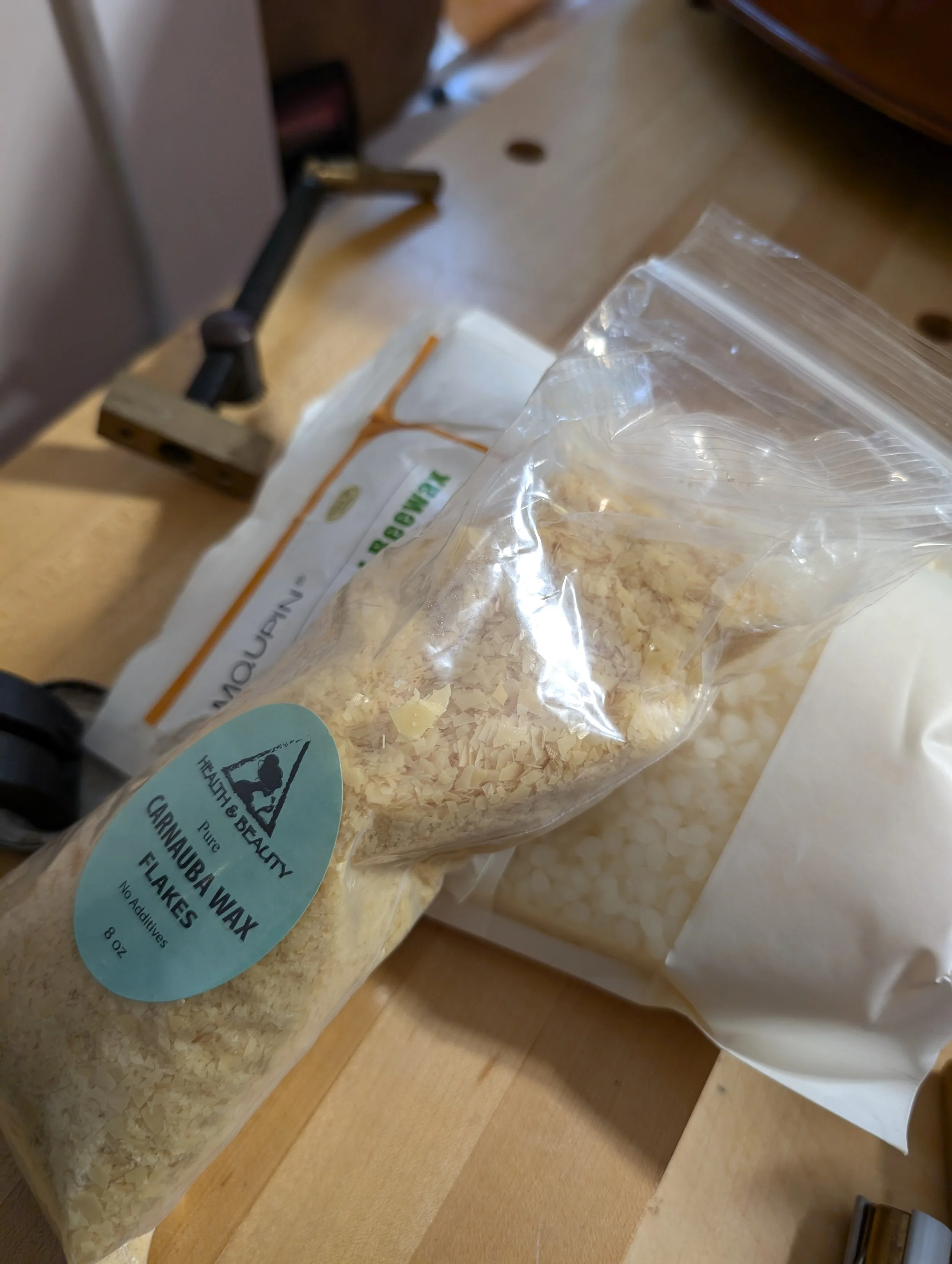
The pure carnauba wax flakes and 100% beeswax pellets
Board Butter
Author: Justin
Prep Time: 5minutes
Cook Time: 10-30 minutes
Total Time: 15-35 minutes
Yield: 1 jar
Ingredients
1 mason jar (125 ml)
42 ml of mineral oil
14 ml of 100% pure beeswax
1 ml of pure carnauba wax
Instructions (Using an electric glue pot/double boiler)
1. Set the mason jar on a kitchen scale and tare so that it reads 0ml.
2. Add the mineral oil to the mason jar.
3. Add the beeswax to the mineral oil.
4. Add the carnauba wax.
5. Put the lid on and screw on tightly.
6. Let the mason jar sit in the double boiler for 30 minutes or until all wax is melted.
7. Mix the mixture so that it is even in colour.
8. Let the mixture cool until it sets.
Instructions (Using a stove)
1. Fill a small pot with water and bring to a boil.
2. Measure all of the ingredients and set aside.
3. Once water is boiled, set a heat proof bowl on top of the pot of boiling water. (The bowl should be big enough to create a seal around the rim of the pot)
4. Turn down the stove to medium so the water is at a simmer.
5. Add ingredients to the bowl.
6. Mix until all the ingredients have melted and is well mixed.
7. Pour the mixture into a mason jar.
8. Let the mixture cool until it sets.